Human Right & Talent Development
Governance
Organizational Structure
Dedicated Organization for Talent Development and Organizational Culture
POSCO’s Human Resources and Corporate Culture Office under the Management Support Division and the Human Resources and Labor Relations Groups at both works handle overall human resources management. As the executive responsible for talent management, the Head of the Human Resources and Corporate Culture Office reviews, approves, and decides on key human resources matters. The Human Resources and Corporate Culture Office is organized into dedicated units responsible for organizational culture, human resources and training support, talent development, and recruitment. The Office collaborates closely with the Human Resources and Labor Relations Groups at Pohang Works and Gwangyang Works to effectively disseminate and implement human resources policies at both Works.

Human Rights Management Council
To practice human rights management at the group level, POSCO participates in the Group Human Rights Management TF led by POSCO Holdings. Through this participation, POSCO standardized its human rights due diligence methodology and the operating guidelines for grievance handling procedures. As a member of the Group ESG Working Council and the Group Human Rights Management Council, POSCO continuously reviews domestic and overseas human rights issues that may arise across the group and the status of human rights management. POSCO discusses group-level response tasks and improvement directions, including human rights due diligence plans, human rights training, and improvement plans for key controversies.

Policy Establishment
Human Rights Management Guideline
POSCO respects and upholds internationally recognized human rights standards, including the Universal Declaration of Human Rights, the UN Guiding Principles on Business and Human Rights, the Ten Principles of the UN Global Compact, the OECD Guidelines for Multinational Enterprises, and the core conventions of the International Labour Organization(ILO). We believe that every individual has the right to be treated with dignity. This includes the rights to life and physical security, freedom of thought, expression, and religion, freedom of association, work-life balance, the right to privacy, access to food and water security, freedom from torture, slavery, and forced labor, the right to fair and decent working conditions, and protection against discrimination.
Since declaring our Code of Ethics in 2003, we have worked to prevent the infringement of others' human rights and to take appropriate measures to prevent and address adverse human rights impacts arising from our business activities and relationships. Following our declaration of group-wide human rights management in February 2025, we have continued to advance our commitment by establishing group-level human rights governance, formalizing our human rights due diligence methodology, and building an integrated grievance mechanism.
All stakeholders can easily access POSCO's Human Rights Management Policy and related information on our website. We have also established the Guidelines for Implementing Human Rights Due Diligence and the Guidelines for Operating Grievance Procedures as operational standards for protecting and respecting human rights in our daily activities.
All employees are required to make an annual pledge to uphold our Code of Ethics, which incorporates a commitment to human rights. We also provide human rights training programs and run related campaigns.
- Pledge of Respect for Human Rights: All employees, including contingent workers, make an annual electronic pledge covering ethics and mutual respect.
- Training on Respect for Human Rights: Mandatory for all employees, this training includes online modules on preventing workplace bullying and sexual harassment, along with offline sessions on respect for human dignity.
- Campaigns on Respect for Human Rights: Issue-specific campaigns are conducted and communicated through internal system announcements.
HR Policy
POSCO HR-Related company rules and guidelines
- Employment Rules: Provisions governing employee employment in accordance with the Labor Standards Act
- Salary Regulations: Provisions governing employee compensation pursuant to Article 27 of the Employment Rules
- HR Regulations: Provisions governing employee HR management
- Performance-Pay Guidelines: Provisions governing performance-based pay under the performance-sharing system
- Reward and Discipline Guidelines: Standards for ensuring the fairness and appropriateness of rewards and disciplinary actions pursuant to Chapter 8 of the Employment Rules
Strategy
Risks and Opportunities
Human Rights & Talent Development Related Risks and Opportunities
POSCO selects and manages its workforce as a material topic. We identify potential workforce-related risks and opportunities and carry out detailed response activities to address them.
| Type | Value Chain | Risk and Opportunity Factor | Description(incl. financial impact) | Detailed Response |
|---|---|---|---|---|
| Risk | Own Operation | - Insufficient training may reduce employees' motivation for growth, raising the risk of losing top talent to domestic and overseas competitors - Increasing expectations from investors and global customers for greater transparency around employee human rights and capability development, along with increasing disclosure requirements |
- Rising costs associated with running capability development and human rights programs for employees | - Deliver training and enhance job expertise through the Learning Platform and the New Collar Level certification system |
| Opportunity | Own Operation | - Opportunities to strengthen job-specific and global competencies through initiatives such as the global expert system - Promotion of expertise across all employees through systematic technical training via POSCO Technical College and the Technician Level(TL) certification system |
- Improve employee capabilities and nurture skilled professionals through diverse training programs offered to all employee | - Strengthening of employee expertise through the Technician Level(TL) certification system and the POSCO Master qualification |
Strategy and Response Measures
Position on Diversity, Equity and Inclusion
POSCO prohibits discrimination based on gender, nationality, and race, and is building a workplace where all employees are respected through the recognition and embrace of diversity and cultural differences. To diversify our workforce, we have set a target to gradually increase the proportion of female position holders and are implementing measures to support the development of female talent. We also support work-life balance by operating on-site daycare centers and, beyond the statutory reduced working-hour systems for pregnancy and childcare, offer additional arrangements such as conversion to alternative work schedules, work-from-home options, and a parenthood immersion period. In addition, we continue to expand the appointment of local employees to managerial positions at our overseas subsidiaries, providing clear pathways for career growth.
Employment of Persons with Disabilities
POSCO and its group companies are making concerted efforts to expand employment opportunities for persons with disabilities, including awarding additional points to applicants with disabilities during the hiring process and employing athletes with disabilities to support their independence and training. As of 2025, our employment rate for persons with disabilities stands at 3.47%, as reported to the Korea Employment Agency for Persons with Disabilities(KEAD). Through POSCO HUMANS―a subsidiary-type standard workplace for persons with disabilities―we provide cleaning, call center, and office support services, enabling people with disabilities to fully demonstrate their abilities. Beyond job creation, POSCO Group continues to work toward building an employment and working environment in which all persons with disabilities are treated with dignity and free from discrimination.
BOD’s Diversity and Expertise
POSCO's outside directors bring extensive experience and expertise across diverse sectors, including industry, finance, academia, law, accounting, and the public sector, enabling them to support management in making sound, unbiased decisions that are not limited to any single field.
Family-Friendly Company
POSCO is undertaking various initiatives to create a more supportive workplace for women. In 2020, we became the first company in Korea to introduce the Work-from-Home Option for Parenting Without Career Interruptions, allowing any employee with a child aged eight or younger―or in the second grade of elementary school or below―to work from home while caring for their child. That same year, we launched the Pregnancy Work-from-Home Option to support healthy pregnancies, and in 2021 expanded eligibility to female employees undergoing fertility treatment.
Also in 2020, we established two Win-Win Daycare Centers in Pohang and Gwangyang, open to children of both POSCO Group and partner company employees. We currently operate six workplace daycare centers across three regions, including Seoul, providing high-quality childcare services. Starting in 2024, to ease the childcare burden during school breaks for employees in Pohang and Gwangyang, we have been running a Kids English Camp for first- and second-grade elementary school students during the winter vacation period in January.
We also offer parental leave of up to two and a half years―exceeding the standard set by the Labor Standards Act―and have introduced a Family Care Leave system that employees can use when family members require care due to illness, accident, or aging, helping employees achieve a realistic balance between work and family life.
No Discrimination or Harassment
· POSCO strictly prohibits discriminatory treatment in all aspects of employment―including hiring, promotion, training, compensation, and welfare benefits―on the basis of race, nationality, gender, age, educational background, religion, region, disability, marital status, or gender identity. We are committed to eliminating discrimination and fostering a culture that respects diversity and inclusion.
· POSCO ensures employment conditions―including appropriate working hours―that enable employees to lead dignified lives. We also provide fair compensation, access to education and training, and a work environment that embraces cultural diversity.
· POSCO prohibits all forms of sexual misconduct―including workplace sexual harassment and violence―that result in sexual humiliation, as well as all forms of bullying that cause physical or psychological harm by exploiting hierarchical or interpersonal power dynamics.
· POSCO has established a formal reporting and response system for workplace bullying and sexual harassment, covering cases in which a superior or colleague causes physical or psychological distress or degrades the work environment by abusing their position or authority through acts such as violence or verbal abuse.
Statement on Living Wage Payment
Paying a living wage is one way to support workers' adequate standard of living, reduce inequality, and address other working condition concerns, including working hours. A living wage generally refers to income sufficient for a worker and their family to maintain a decent standard of living, based on standard working hours per week. POSCO is committed to providing all employees with an adequate standard of living.
Monitoring and Management of Living Wage Levels
POSCO monitors and manages living wage compliance for all employees at its domestic operations, applying standards in consideration of regional living wage policies. As of December 2025, results confirmed that all permanent and contract employees at POSCO receive wages at or above the applicable regional living wage levels.
HR Evaluation
For fair evaluation, both evaluators and those evaluated make a fair-evaluation pledge before evaluation, evaluators are regularly trained on evaluation criteria and methods, and those evaluated can raise objections to evaluation results through a separate procedure. After evaluation ends, monitoring is conducted to check whether it was carried out fairly. Performance-evaluation results are linked to the following year's compensation, which is applied differentially according to individual performance, with no differentiation by gender, age, or nationality.
- Performance Evaluation: Each year, based on the work results and self-evaluation the employee has written, first- to third-round performance evaluations systematically measure individual work performance, and managers can provide coaching and feedback on work at any time.
- Competency Assessment: So that employees can self-diagnose and develop the attitudes and abilities needed for their work, self-assessment and supervisor assessment are conducted each year, centered on work attitude and work skills. Results are fed back not as scores but as strengths, areas for improvement, and open-ended comments, so employees can clearly recognize their strengths and weaknesses and supplement and develop them.
- 360-Degree Evaluation: To provide a healthy communication culture within the organization and a chance to review managers' leadership, department members and collaborating colleagues assess managers' working and communication styles. Results are provided anonymously with a balanced view of strengths and areas for improvement, serving as a basis for managers to consider how to improve organizational operations on their own and strengthen their capabilities.
Social Dialogue
Under the philosophy of being a partner that builds a better tomorrow together, the company carries on a tradition of cooperative, win-win labor relations. It guarantees the constitutional freedom of association and the right to collective bargaining, and three labor unions are active: two affiliated with the Federation of Korean Trade Unions and the Korean Confederation of Trade Unions, and an enterprise-level union not affiliated with an umbrella organization. Through the bargaining-window unification procedure, the POSCO Labor Union affiliated with the FKTU exercises the right to collective bargaining, and under the Trade Union and Labor Relations Adjustment Act it concludes a wage agreement through annual wage bargaining and a collective agreement through collective bargaining every two years.
Under the Act on the Promotion of Worker Participation and Cooperation, it also operates a Labor-Management Council whose members are elected by direct employee vote. Through quarterly regular councils, it resolves employee grievances and hears suggestions, and discusses current issues such as welfare-system improvements to derive and implement improvement directions. Along with this, it operates regular councils in which plant heads and managers, the Labor Union, the Labor-Management Council, and partner-company supervisors and employees participate directly to prevent environment-related risks.
Employee Organizational Health Assessment
To build a sustainable organizational culture, since 2000 the company has comprehensively assessed satisfaction with the company, organization, work, and leadership once a year for all employees. From 2024, it has conducted an organizational health assessment, and it broadly listens to employee opinions(VOE, Voice of Employees), including survey questions that reflect a DE&I perspective. The results are actively used in company-wide system improvements and policy-making.
Organizational Culture
POSCO fosters an organizational culture where people at all levels treat one another with care and respect and feel comfortable speaking up. We prohibit discrimination based on gender, nationality, race, disability, and other factors, and embrace diversity to build a workplace where everyone can grow and thrive together. To assess and continuously improve our organizational culture, we conduct an Organization Health Assessment for all employees worldwide. The results are shared with each department, empowering employees to actively shape a better workplace.
Horizontal communication
Grounded in mutual trust between management and employees, we operate a variety of communication channels to foster a horizontal and creative organizational culture that delivers greater value.
Young Board
To strengthen future competitiveness, POSCO runs the Young Board program, selecting young talent with strong work ethic and communication skills. The program gives promising junior employees opportunities to develop leadership capabilities and a managerial mindset. In 2025, 16 Young Board members were selected and carried out projects under the theme of “POSCO Standard.” Their findings were presented to all employees at a management meeting.
The Young Board also plays a key role in driving company-wide change by identifying actionable ideas to address structural inefficiencies in areas such as cost, quality, energy, and facilities, as well as supporting product development, business advancement, and WX.
POSquare(POS+Square)
POSCO operates a two-way communication platform that actively gathers employee feedback and responds promptly to key inquiries related to company policies, benefits, and welfare programs. Issues requiring immediate action at the department level are addressed on the spot, while company-wide matters are reviewed by relevant teams and shared transparently via the internal bulletin board.
In 2025, we launched POSquare, a new online suggestion channel that further enhances the speed and accountability of our feedback process. Through POSquare, we collect employee input, provide timely responses, and share common themes across the organization―supporting open communication and continuous improvement.
We also jointly operate a Low Value-Added Work Improvement Council with the employee representative body, actively eliminating unnecessary processes and creating an environment where employees can focus on what truly matters. Improvement outcomes are shared company-wide on a quarterly basis, helping build a shared sense of purpose and more efficient ways of working.
Tong-Tong Committee and Millennial Committee
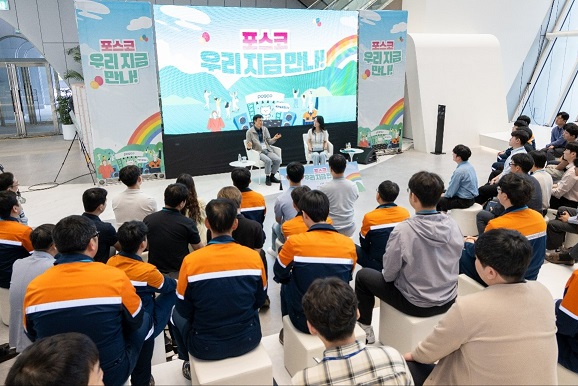
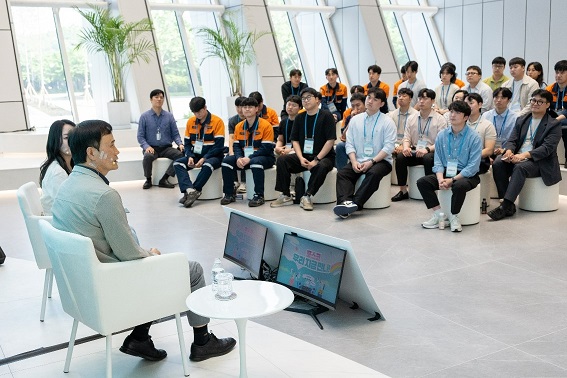
This initiative is designed to bridge generational gaps by facilitating direct communication between management and employees in their 20s and 30s. While Town Hall Meetings provide a platform for dialogue with a broad employee base, the TongTong Committee and Millennial Committee offer more intimate, focused settings―typically involving six to ten participants―to engage in in-depth discussions on organizational culture, workplace issues, and related topics.
To foster candid and open communication in a more informal atmosphere, we also organize hands-on activities such as craft workshops, creating opportunities for employees to interact with management in a relaxed and approachable environment.
Town Hall Meeting
POSCO conducts regular Town Hall Meetings to foster meaningful two-way communication between management and employees. In 2025, three such meetings were held, providing a direct platform for executives to share management philosophy and key company-wide messages with employees.
Employees are encouraged to express their views openly, both in person and through digital channels such as Microsoft Teams and YouTube Live chat, enabling transparent and horizontal communication across the organization.
This open communication culture has become firmly established across all organizational levels―including headquarters, steelworks, and research institutes―serving as an integrated two-way communication forum where executives and employees engage in direct and constructive dialogue.
Operating Family-Friendly Work Systems
Flexible Work System
POSCO offers a range of flexible work arrangements that enable employees to maintain a healthy work-life balance while supporting personal growth and well-being. In particular, the Biweekly Four-Day Workweek System, introduced in 2024, enables employees to maximize productivity during working days and dedicate every other Friday to personal development, childcare, or time with family.
Status of Flexible Work Program Usage
| Category | Description | Beneficiaries |
|
|---|---|---|---|
| Full-Day Workers |
Selective Working Hours System |
Employees may freely adjust their working hours within a 4-week settlement period, provided that average weekly hours do not exceed 52 hours (40 regular hours + 12 overtime hours | 5,492 |
| Biweekly Four-Day Workweek System |
By working one additional hour each day from Monday to Thursday over two consecutive weeks, employees who maintain an average of 40 working hours per week are entitled to take every other Friday off | 9,723 |
|
| 8-5 Workday System | With a standard schedule of 8 AM to 5 PM ― one hour earlier than the previous 6 PM finish ― this arrangement was introduced to guarantee employees a life with time to enjoy their evenings | 6,646 |
|
Other | - | 2,592 | |
Shift workers | 6,540 | ||
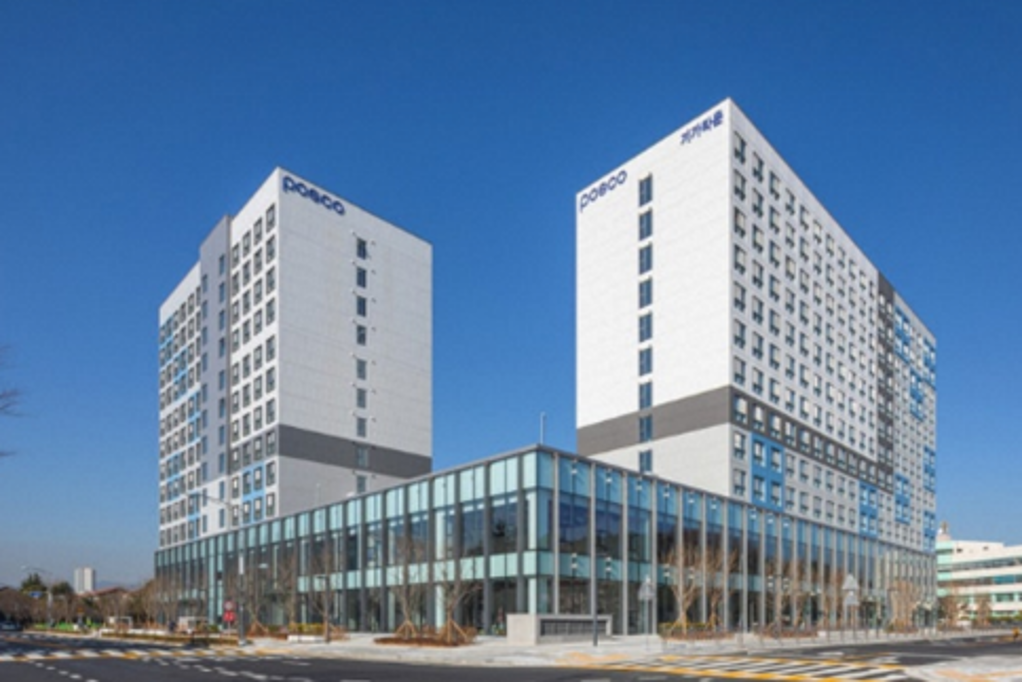
POSCO continues to enhance the working environment and welfare facilities for its employees. In January 2022, we opened Giga Town, an employee residential complex in Gwangyang, developed following a comparative review of POSCO A&C’s modular construction method and conventional reinforced concrete(RC) construction. The complex offers 500 private rooms, each equipped with a bathroom and shower, providing greater comfort and convenience for residents.
In the Pohang area, the existing Dongchon Plaza will be demolished and replaced with a new employee dormitory complex consisting of four buildings and a total of 800 rooms, with completion scheduled for the second half of 2029.
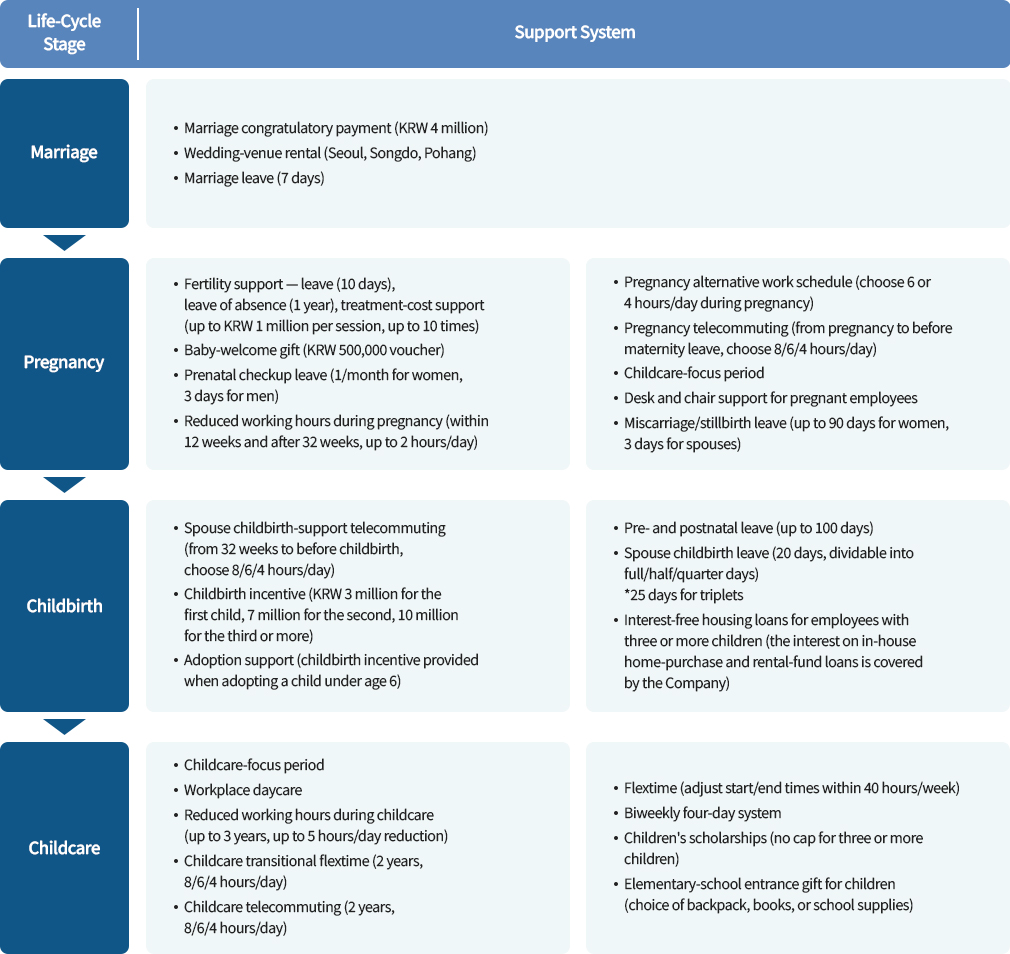
To help address Korea’s declining birthrate and fulfill our corporate responsibilities, POSCO actively incorporated employee feedback (VOE) in developing programs that support childbirth and childcare. In recognition of these efforts, we were featured as an exemplary company in the Best Company for Childbirth and Childcare Support casebook published by the Ministry of Employment and Labor in 2023.
We also provide a comprehensive range of family- and childbirth-friendly programs spanning major life stages―from marriage to children’s education―enabling employees to navigate pregnancy, childbirth, and parenting without interrupting their careers. Through these efforts, POSCO obtained the Family-Friendly Certification from the Ministry of Gender Equality and Family in 2025.
Personalized Support Programs for Different Life Stages
Talent Acquisition
POSCO seeks talented individuals who demonstrate creativity, initiative, and a collaborative mindset, while taking into account our strategic direction and recruitment needs. Applicants who pass the document screening take the POSCO Aptitude Test (PAT), an assessment covering core job competencies and personal attributes. The first interview focuses on job-specific knowledge and expertise, while the second offers a deeper look at character and organizational fit―before a final hiring decision is made.
POSCO Talent
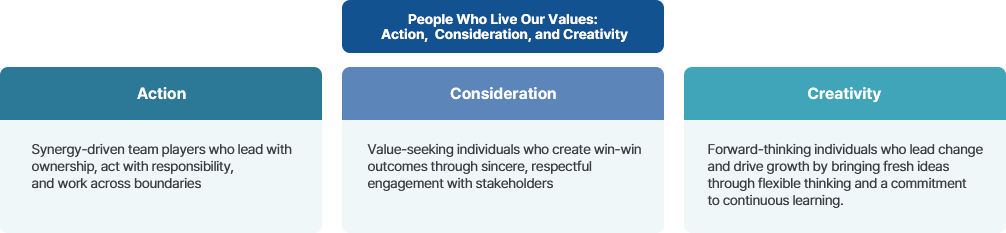
To advance our vision of a POSCO-style AI steelworks, we recruit specialists in AI model development and maintenance and operate internal AI master’s-, doctoral-, and expert-level learning programs. To further strengthen safety capabilities across our operations, we rotate high-performing engineers into safety-related positions, recruit experienced safety professionals, and are reviewing the establishment of dedicated safety-focused educational programs.
Operating Talent-Development Programs
POSCO offers a wide range of development programs designed to strengthen job-specific expertise. Through field-centered technical training, talent development initiatives, competency-building programs, and tailored learning support, we help each employee grow into a true professional in their field. We place particular emphasis on cultivating skilled specialists to ensure the transfer of core technical knowledge in response to the evolving work environment, and operate customized leadership development programs to enhance the leadership capabilities of position holders.
In addition, to keep pace with rapid technological change both inside and outside the company, we are expanding our in-house training content with a focus on practical, hands-on education to strengthen employees' AI capabilities.
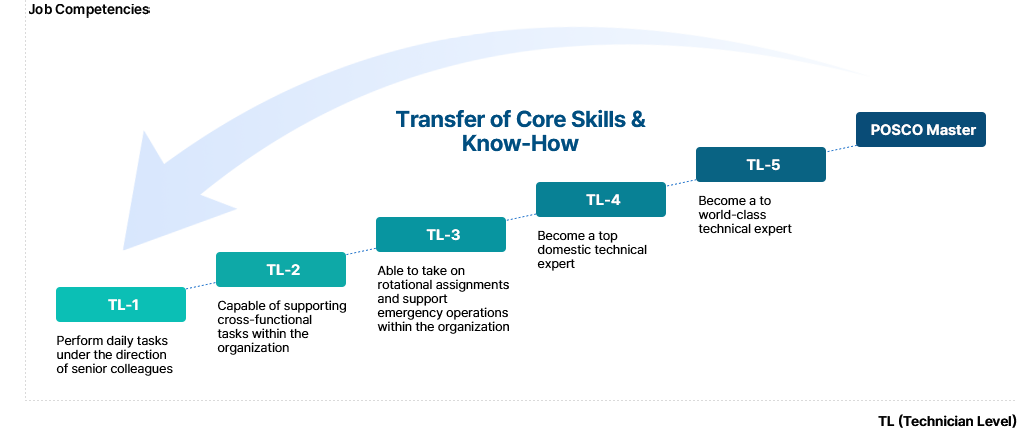
① Technician Level(TL) Certification System and POSCO Master
POSCO operates the Technician Level(TL) Certification System to develop production and technical employees to a world-class standard. Employees who meet the requirements for their current level―across five levels from Level 1 to Level 5―are eligible to sit for the certification exam. With each level gained, employees receive promotion credits and performance incentives that recognize and reward their professional progress.
Those who reach TL Level 5, the pinnacle of technical achievement, become eligible for designation as a POSCO Master―the highest honor in our production and technical workforce. Selection is rigorous, weighing not only technical excellence but also integrity, character, and peer recognition. POSCO Masters receive a special promotion, a range of financial and non-financial rewards, the ability to remain in their roles beyond the mandatory retirement age of 60, and a permanent place in the Park1538 Hall of Fame. As of 2025, a total of 29 employees have been named POSCO Masters.
② Learning Platform
POSCO operates a learning platform that allows all employees to learn anytime, anywhere via PC, tablet, or smartphone. Beyond e-learning courses, the platform offers diverse learning resources including e-books, audiobooks, and immersive 3D/VR content. It also features an AI-powered recommendation service that analyzes each employee's job responsibilities and areas of interest to deliver personalized learning suggestions.
Learning Platform Training Status
| Category | Regular courses | Ad hoc courses | e-learning courses | Total |
|---|---|---|---|---|
| Learning platform | 77 | 56 | 6,753 | 6,886 |
③ Rehiring Program
In accordance with a labor-management agreement, POSCO rehires employees who reach retirement age each year, with the exception of those who opt out, have health-related limitations, or have significantly low performance records. Through this program, experienced employees pass on their skills and know-how to junior colleagues―supporting the growth of less-tenured employees and helping us maintain our technical competitiveness.
④ New Collar Certification System
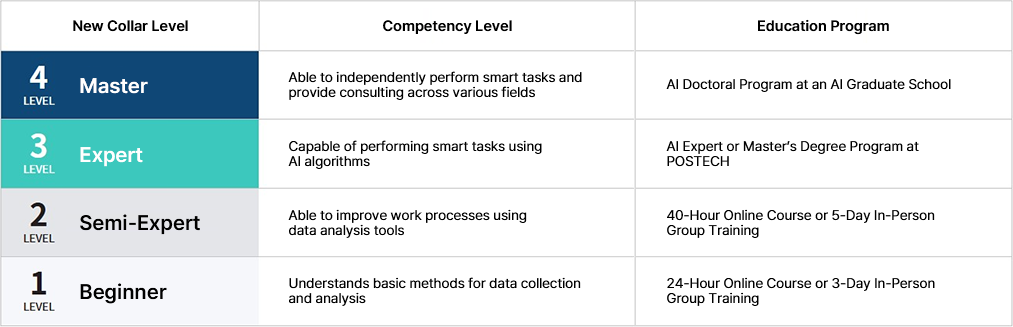
POSCO defines employees who leverage emerging IT technologies to improve work processes and create new value as 'New Collar' talent. To foster these capabilities, we operate the New Collar Level Certification System, which classifies data analytics and utilization proficiency into four levels and offers corresponding online and offline training at each stage. Employees who pass the certification exam receive HR benefits―including preferential consideration for overseas study opportunities―providing additional motivation to continuously develop their skills and capabilities.
Measuring Worker Training Program Effectiveness
POSCO employs a structured framework to evaluate the effectiveness of its employee training programs and support continuous improvement. We track training performance through metrics such as the number of training sessions, participation rates, and investment levels, while publicly disclosing key indicators including total training hours, average training hours per employee, and training expenditures. Program effectiveness is measured through outcomes such as certification attainment and course completion rates. We also monitor the performance of the TL System for production and technical talent development and the New Collar Certification System for building capabilities in emerging IT technologies.
Cumulative Number of New Collar and Technician Level(TL) Certified Employees
| Category | 2025 Targets | 2025 Results |
|---|---|---|
| Level 1 | 5,079 | 5,244 |
| Level 2 | 1,258 | 1,200 |
| Level 3 | 96 | 86 |
Level 4 | 44 | 48 |
| Category | 2025 Results |
|---|---|
| TL 1 | 1,226 |
TL 2 | 3,375 |
TL 3 | 3,716 |
TL 4 | 1,025 |
TL 5 | 445 |
Training Program Performance and Effectiveness Results
| Training Program | Sessions | Participants | Effectiveness Metric | Measurement Method | Quantitative Result |
|---|---|---|---|---|---|
| Learning platform | Year-round | 18,750 people |
Content usage rate and learning-completion rate | Analysis of platform-access data and | 172,462 total learning instances, 79% learning-completion rate |
| Technician Level(TL) certification system |
4 times/year | 1,636 people |
TL certification rate | Year-on-year increase in TL certification rate |
61% certification rate in 2024 → 63% in 2025(up 2%)
|
Operating Career-Development Programs
POSCO actively supports employees’ career development to cultivate next-generation business leaders with strategic insight and strengthen technical expertise across its operations. Based on a job-specific Career Development Plan(CDP) framework, employees establish their own career development plans. Upon joining the company, employees spend a designated period developing expertise in their assigned field before broadening their experience across other functional areas.
To encourage self-directed growth, we conduct annual career development discussions with department heads and operate an internal job-posting system. Regular job rotations within departments and functions help strengthen our employees’ technical expertise while enhancing their ability to respond effectively to unexpected situations. High-performing employees are further developed into field supervisors through advanced training in production process management. With operations in more than 20 countries, our overseas subsidiaries pursue locally led management. To support the long-term career development of local employees, we are progressively localizing managerial positions at the department head level and above.
Professional Degree Program
In 2014, POSCO established the POSCO Technology University to support the self-development and lifelong learning of field employees. As a government-accredited junior college authorized to confer academic degrees, we provide a fully company-funded education. In response to the rapidly evolving AI landscape, we are also expanding our AI and robotics curriculum and pursuing a transition toward the POSCO Steel AI Convergence College.
· Eligibility : Permanent employees from 13 POSCO Group companies―including POSCO, POSCO FUTURE M, and POSCO STEELEON―who aspire to become core field professionals
· Curriculum : General education courses such as engineering mathematics, physics, and chemistry, along with required major courses including strength of materials, machine element design, and control engineering
· Format : Students attend classes two days per week while working three days per week, completing 80 credits over two years to graduate
· Results : A cumulative total of 435 employees earned degrees between 2014 and 2025
Certificate Acquisition Support Program
To support employees in obtaining professional certifications, we offer a variety of programs, including e-learning courses, practical training centers, and financial subsidies.
· Training Support : E-learning courses covering safety, Professional Engineer, Master Craftsman, Engineer, and Industrial Engineer certifications; training programs at the POSCO Group University; and support for establishing practical skills training facilities.
* In 2025, 5 employees obtained Professional Engineer certifications and 639 obtained Master Craftsman certifications.
· Subsidies : Financial support is provided on a tiered basis according to certification type and level of difficulty, covering 254 certifications across 10 fields, including metallurgy, machinery, electrical and electronics, safety, firefighting and health, and environment and energy.
* In 2025, a total of KRW 2.22 billion was paid to 1,492 employees.
Global Regional Specialist Program
The Global Regional Specialist Program dispatches employees to countries where we operate overseas subsidiaries, enabling them to learn about local cultures and build a foundation for future business contributions. Participants undertake local language training, engage in cultural immersion activities, and complete internships at local subsidiaries to gain firsthand exposure to regional business environments.
· Eligible Regions : Countries with our overseas subsidiaries, including Japan, China, Mexico, India, Indonesia, and Thailand
· Duration : Up to one year (six months of local language study followed by six months at a local subsidiary)
Management in the Steel Industry(MSI): POSTECH Steel Management Course
To develop future leaders for the global steel industry, we offer this program to outstanding Global Staff from our overseas operations, providing opportunities to strengthen their capabilities in steel production, business management, and core Industry 4.0 technologies.
· Format : A one-year, three-semester program(spring, summer, and fall) conducted alongside participants’ regular work responsibilities
· Track Record : 47 selected candidates from 8 countries(as of 2025)
· Employee Testimonial : “Through the POSTECH Steel Management Course, I was able to connect current challenges in the steel industry with management and technical knowledge and approach problems from a new strategic perspective rather than relying on familiar methods or past experience." ― TRYN KIATCHARTSAKUL, POSCO-Thainox
GMP(Global Mobility Program)
The Global Mobility Program(GMP) brings local employees from overseas subsidiaries to our headquarters for approximately three to five months. Participants gain firsthand experience of our ways of working, engage with Korean culture, and build networks with colleagues at headquarters.
· Participation : 147 employees from 11 countries(as of 2025)
Grievance Channels
POSCO operates a grievance-handling process to address human dignity-related concerns and grievances experienced by employees and stakeholders across its business operations. Reports may be submitted anonymously through channels such as the Ethics Counseling Center (Helpline) and the Unethical Conduct Reporting Center (Hotline). Upon receipt, the Corporate Audit Office provides prompt responses and, where necessary, conducts audits and takes personnel measures accordingly.
Throughout this process, POSCO guarantees anonymity, ensures procedural transparency, and maintains the independence and fairness of grievance handling. We strictly prohibit any disadvantage or secondary victimization of reporters and victims, and have institutionalized disciplinary provisions for violations of these principles. Every effort is made to ensure that concerns raised are reviewed and remedied in a timely manner. The number of human rights-related cases received and resolved through our grievance channels is also transparently disclosed in our Sustainability Report. In 2025, a total of 80 human dignity-related cases were received through our grievance channels, all of which were fully resolved.
Grievance Handling Process

Step-by-step Response Process
POSCO has established a structured response process to address violations of human dignity, including workplace bullying and sexual harassment. This process prioritizes victim protection and ensures the prompt resolution of cases requiring immediate support and the prevention of secondary harm.
| Steps | Step 1 | Step 2 | Step 3 | Step 4 |
Step 5 |
Step 6 |
|---|---|---|---|---|---|---|
| Process | Incident awareness | Incident intake | Protection Measures | Incident Investigation |
Disciplinary Action |
Post-Incident Monitoring |
| Key Point |
Anyone can report |
(Initial consultation within 24 hours) | (Prompt separation of the parties involved) | (Fact-finding and determination of policy violation) |
(Review and disciplinary decision |
(Monitoring and prevention |
| Responsible Party |
- | Corporate Audit Office | HR department | Corporate Audit Office |
HR department |
Corporate Audit Office, |
Victim Remedies
- Signing a confidentiality pledge: mandatory for all investigation participants
- Operating victim-protection measures: legal, medical, and counseling support at the victim's request
Legal support: a dedicated in-house lawyer is assigned, and outside legal counsel is also available if desired
Medical support: support for treatment costs of illnesses caused by sexual-ethics violations
Counseling support: psychological counseling programs through professional counselors at the Mindfulness Center
- Codification in Company Regulations: Codifying victim remedies and the prevention of secondary harm in company regulations
The company severely disciplines those who conceal workplace bullying or sexual harassment or cause secondary harm, and disciplines even more severely when a manager of the victim, who has a duty to protect the victim including preventing secondary harm, causes secondary harm. It can also impose management responsibility on the manager of the person who caused the secondary harm.
Risk Management
Risk Management Activities
Human Rights Due Diligence
POSCO conducts human rights training and human rights due diligence at its domestic and overseas worksites under the Corporate Planning and Finance Office, and reports its human rights due diligence plans and outcomes to the ESG Committee.
The Company operates a human rights due diligence process covering all employees at domestic and overseas worksites, which includes identifying and assessing actual and potential human rights impacts, responding to issues, documenting remediation actions, and engaging with stakeholders.
Human Rights Due Diligence Process

Human Rights Assessment Areas for Domestic and Overseas Worksites : 11 Areas
| Establishment of a Human Rights Management System | Non-discrimination in Employment | Freedom of Association and Collective Bargaining | Prohibition of Forced Labor |
| Prohibition of Child Labor | Assurance of Occupational Health and Safety | Prevention of Workplace Harassment | Responsible Supply Chain Management |
| Protection of Local Residents' Human Rights | Guarantee of Environmental Rights | Protection of Consumers' Human Rights |
Vulnerable Stakeholders
Based on the results of desk-based due diligence, POSCO conducts on-site due diligence at worksites and lower-performing subsidiaries where adverse human rights impacts have been identified. These on-site assessments involve in-depth interviews and field inspections focused particularly on employees in vulnerable positions, including female employees.
Targets and Categories of Vulnerable Groups
| Target | Category | Type |
|---|---|---|
| Company | Women | Women in early pregnancy, near childbirth, or raising children |
| Age | Young workers aged 15~29 or workers aged 55 and over | |
| High-risk jobs | Workers engaged in accident-prone processes and production | |
Employment type | Interns, contract workers, and dispatched/service workers | |
Wage level | Low-wage workers(below two-thirds of median income, on an OECD basis) | |
Minorities | People with disabilities, those with medical histories, foreign and migrant workers, and religious, racial, ethnic, and sexual minorities | |
Other | Workers who raised specific human rights issues through grievance procedures, or those identified by us or our subsidiaries as requiring in-depth assessment | |
Local residents | · Indigenous people1) residing near our or our subsidiaries' worksites | |
Consumers | · Consumers who raised specific human rights issues through grievance procedures, or those identified by POSCO or our subsidiaries as requiring in-depth assessment | |
1)Indigenous people residing near a worksite are identified as communities located within 5 km of the worksite that are affected by our operations, based on the list of regions and countries with indigenous communities published by IWGIA (International Work Group for Indigenous Affairs)
2)Conflict-affected areas are identified based on the list of conflict-affected countries published by UN OCHA(United Nations Office for the Coordination of Humanitarian Affairs)
Human Rights Due Diligence Results
To objectively assess and improve human rights standards across our domestic and overseas worksites, POSCO has established a standardized human rights due diligence framework structured around three stages: desk-based due diligence, on-site due diligence, and the development of improvement measures. Based on due diligence conducted at our overseas subsidiaries in 2024 and at our domestic worksites in 2025, no serious human rights violations were identified across our business operations. For issues requiring attention, remedial measures have been implemented accordingly.
| Assessment Target | Period | Method | Assessment Result |
|---|---|---|---|
| Domestic worksites | 2025.4 ~ 2025.7 | · Desk-based due diligence · On-site due diligence (some sites and subsidiaries) |
· Overall performance is strong across all areas; adverse human rights impacts are being mitigated through prompt resolution and remediation of general issues. |
Managers and Global Staff at 50 overseas subsidiaries |
2024.8 ~ 2024.9 | · The majority of subsidiaries are performing well. Further efforts to strengthen training, awareness-raising, and on-the-ground implementation are needed for employees to meaningfully experience the impact of these initiatives. |
Improvement Measures
Building on these results, POSCO is actively pursuing ongoing improvements. For areas identified as requiring further attention during the due diligence process, we are implementing both systemic improvements and targeted training. At our domestic worksites, we are focused on fostering a culture of mutual respect and strengthening the reliability of communication channels so that all employees feel comfortable speaking up. Our overseas subsidiaries are also conducting human rights training to ensure that all employees have a thorough understanding of the importance of human rights. Going forward, we plan to manage human rights risks by evaluating the effectiveness of our improvement initiatives through future human rights due diligence.
Metrics and Targets
Targets
Mid- to Long-Term Human Rights Management Targets
Mid- to Long-Term Human Rights Management Targets
| Category | 2025 | 2026 Targets | 2027 Targets | 2028 Targets |
|
|---|---|---|---|---|---|
| Overseas-subsidiary human rights due diligence implementation rate |
Cumulative implementation rate measured by applying the group-wide methodology established in 2025 | - | 23% | 57% | 100% |
Diversity Targets
Current and Target Representation of Women in Leadership Roles
| Category | 2025 Results |
2027 Targets |
|---|---|---|
| Percentage of women among total leadership roles(P, R) | 8.2% |
9.0% |